Brasil! Brasil!
It’s been a while since I posted about an exhibition but one of my resolutions of 2025 is to get a better culture v food balance in these little pieces.
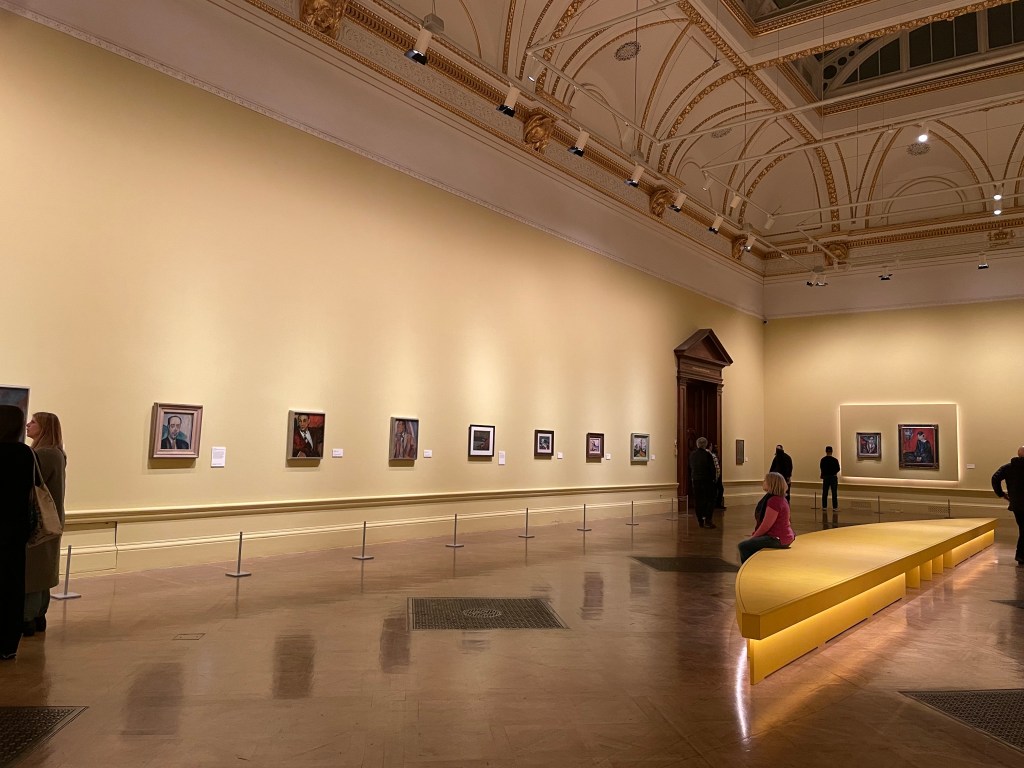
So I begin with the RA’s latest show in its main galleries, Brasil! Brasil! The Birth of Modernism. In contrast to the Summer Exhibition, with its crammed to the ceiling hang, this show has a feeling of space and stillness that was very welcome after a somewhat hectic week hitting the books.
The exhibition begins with a room about a previous show on Brazilian artists that the RA hosted in 1944. It’s an obscure fact of wartime history that Brazil was the only South American country to declare war on Hitler’s régime, a gesture that meant that the British were keen to reward their ally with a bit of cultural diplomacy, publicising hitherto obscure artists and purchasing their work for UK institutions.
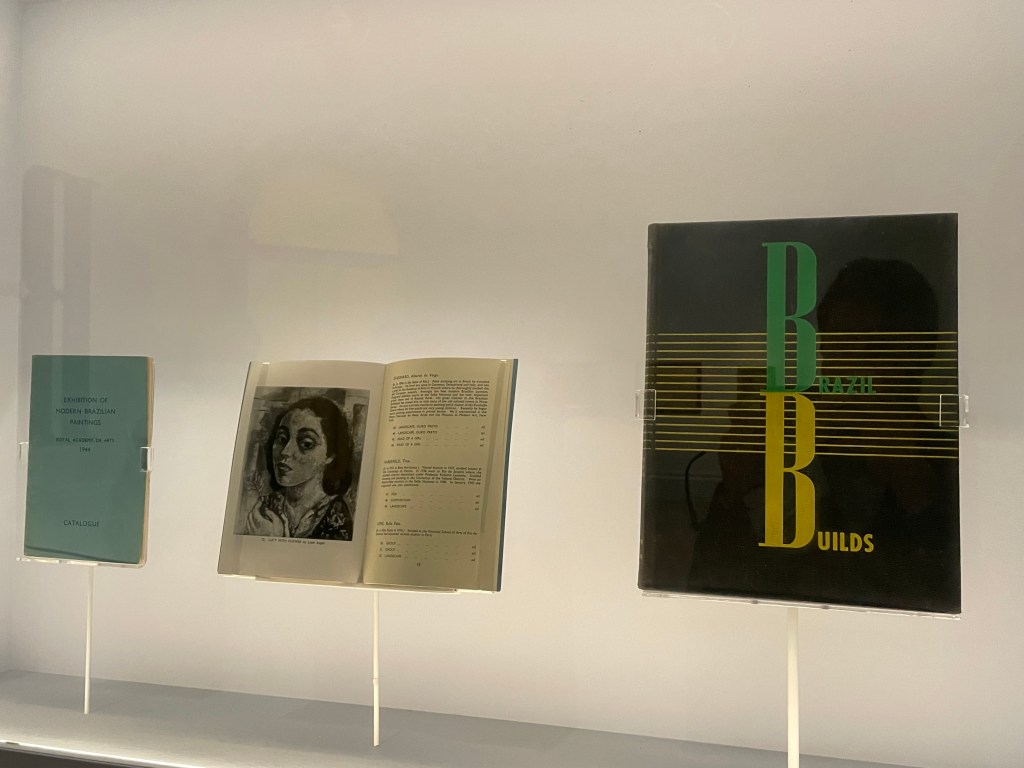
In a week when I’d started on Book 5 of Dance to the Music of Time (the Moreland book) and joined the Anthony Powell Society this brought about memories of Colonel Flores, the charming Brazilian military attaché who appears in The Military Philosophers at the Victory in Europe Thanksgiving service at St. Paul’s in the company of one of Nick’s old flames.
As its title implies Brazil Builds was concerned with modernism in both the visual arts and architecture. The RA’s current show, and it is perhaps a weakness, sticks strictly to the visual arts. As you’ll note there’s a colossal amount of space in the RA’s rooms that could have been filled by vitrines outlining Modernist architecture and even Modernist writers.
Because it’s clear that the three disciplines were very closely linked in Brazil from the 1920s through to the 1950s. Two of the more striking works are portraits of Mario de Andrade, a key figure in Brazil’s literary scene about whose work I would like to find out more. Someone who linked architecture and art was Flavio de Carvalho, who somewhat surprisingly turned out to have studied engineering at Durham University. There’s a hilarious photo of him stalking serenely and impassively in a get up of fishnets, skirt and blouse while a Brazilian urchin pisses himself laughing in the corner of the shot.
The rest of the work varies in quality and originality. Many of the artists featured were born in Europe, or studied in Europe, and you can have fun playing spot the influence. But what marks out many of the canvases is the influence of geography and environment on the colour palette and subjects of the artists – rich greens of the jungle, Black skin tones of course, and coffee and banana plantations are few and far between in European modernism
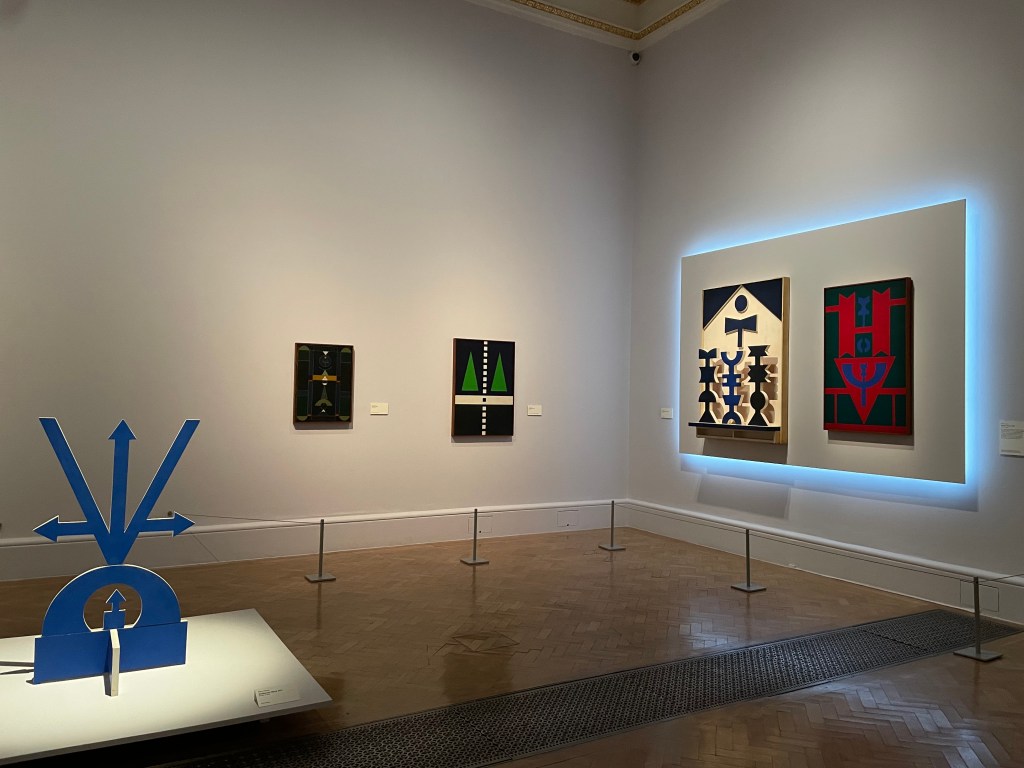
The most enjoyable artist to my eye was Anita Malfatti, which makes it a shame that she abandoned her youthful radicalism for a more traditional approach after she received a negative critical response. Someone who kept to a radical line was the final artist in the show, Rubem Valentim. His exploration of the symbols of Candomblé, an African diasporic religion, are a colourful flourish at the end of a very enjoyable show.
With nearly all of the artwork from collections not just outside of the UK but from across the Atlantic it’s well worth catching this show, especially if you want to dream of tropical climes during this chilly London February.
Art Exhibitions London Modernism Anthony Powell Art Brazil exhibition London Royal Academy

f1insburyparker View All →
Blue Badge guide to London and academic specialising in early twentieth century history. Blogging on history, academia, and food and culture in the capital (and occasionally elsewhere).
 A London Journal